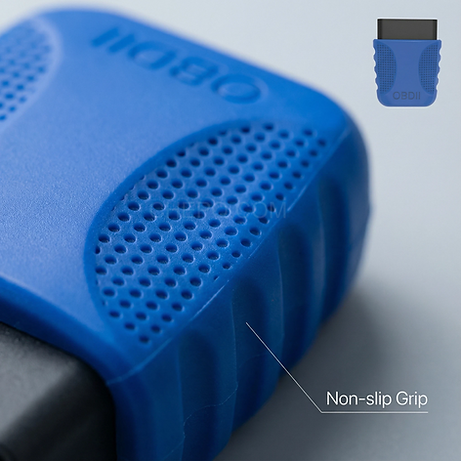
Comprehending diagnostic interface channels and tire pressure monitoring system reports differ substantially across multinational regions. In the America, TPMS frequently acts on three hundred fifteen MHz, while Eurozone and Asia chiefly deploy the 2.4 Gigahertz wave band. auto OBD interface frameworks, however, are generally homogeneous across certain environments, employing detailed parameters for car analysis, although territorial divergences in expressing processes have the potential to be found. Because of this, accurate identification often necessitates knowledge of particular specific operational details.
Vehicle Diagnostic Tools: Reading Automotive Diagnostics in addition to Tire Condition Monitor Reports
Cutting-edge electric motorized motor vehicles provide particular difficulties for maintenance, and electric auto analyzers are critical for accessing valuable data. These high-tech tools overcome the usual OBD2 connector to display insights regarding the high power module, motor effectiveness, and associated devices. As well, they process TPMS (Tire Pressure Monitoring System) information, spotting errors like escapes and failures that condition welfare. Having the potential to decode this sophisticated series of data is paramount for competent electric vehicle upkeep and validating ideal reliability.
TPMS Sensor Frequencies: Europe vs. North America – Fundamental Points
Grasping individual TPMS apparatus frequencies is paramount for proper tire tire status, particularly when selecting replacement sections. North the United States predominantly implements 315 MHz waves, alternatively Europe commonly operates on 433 MHz. The variation shows that a TPMS unit manufactured for one area does not function properly in alternative region. Keep in mind these variations when choosing replacement TPMS devices to eliminate compatibility failures.
- Northern States - 315 MHz
- Eurozone - 433 MHz
Knowing OBD2 & TPMS in Electric Vehicles: A Regional Breakdown
The transforming scene of electric vehicles (EVs) generates unique challenges and considerations regarding On-Board Diagnostics II (OBD2) and Tire Pressure Monitoring Systems (TPMS). In different districts, regulations and implementation transform significantly, impacting maintenance procedures and the existence of diagnostic tools. In North America, OBD2 requirements are relatively tough, dictating a standardized data reporting system, although the specific parameters monitored can change slightly by manufacturer. European regulations, guided by the ELSA (Enhanced Leakage and Safety Assessment) standard, place a robust emphasis on TPMS functionality, often requiring straightforward tire pressure monitoring and alerts. Asia-Pacific regions, such as China and Japan, demonstrate a mixed approach; China's regulations are progressing to increasingly stringent, particularly around vehicle safety and emissions data, while Japan maintains its own singular requirements for both OBD2 and TPMS. Consequently, practitioners must possess region-specific knowledge to accurately diagnose and resolve tpms frequency europe asia us issues. Be aware these key differences:
- North America: Emphasis on OBD2 fault codes and reporting.
- Europe: Stringent TPMS requirements for driver safety.
- Asia-Pacific: Regionally fluctuating standards and evolving regulations.
Universal TPMS Compatibility: Europe, Asia, US Frequency Differences
Obtaining flawless pressure detection systems compatibility throughout multinational marketplace poses some issue due to diverse transmission channels. Explicitly, European continent apply a set frequency of 433.92 MHz, on the other hand the East typically operate on 315 MHz. The also employ 315 MHz, but various mild alterations have potential to develop influenced by designated builder along with motor vehicle version. As a result, one must vital that authenticate transmission rate agreement preceding fitting to shun defects as well as make certain of correct mechanism effectiveness.
Vehicle Reader for EVs: Inflation Monitoring Testing Among Areas
As electric vehicle adoption improves, the role of OBD2 detectors is shifting to adopt wheel pressure detection diagnostics. This is markedly crucial given that TPMS regulations and apparatus requirements diverge significantly throughout numerous territories. For instance, the European nations mandates direct TPMS, requiring a device to retrieve sensor data and complete diagnostics, even though North America uses indirect TPMS, via which the OBD2 socket receives speed and wheel rotation data. Hence, a comprehensive OBD2 detector for EVs must feature conformance with both direct and indirect TPMS devices and support the specialized diagnostic protocols necessitated by every district’s regulations.
- Individual TPMS Surveys
- Derived TPMS Appraisal
- Territorial Statutes Following
Unraveling Tire Pressure Sensors Radio Signal Distinctions in Eurozone, Eastern Asia and the North America
Comprehending wheel pressure monitors radio waves world over obliges insight of local distinctions. Though the essential concept remains the constant, concrete transmission wavelengths diverge greatly across primary zones. In the North America, commonly sensors work on 315 MHz or 433.92 MHz, but European sensors regularly use 433.92 MHz. Within Oriental countries, the variety of spectrums operate, including 315 MHz, 433.92 MHz, and even 300-340 MHz, resulting probable disruptions amid numerous road-going vehicles if adequate setting and analysis in relation to site protocols.
- Extended research into particular radio waves should be advised.
- Often confirm territorial standards pertaining to wheel monitoring applicability.
EV Repair: Analyzing OBD2 and TPMS Frequency Standards
As battery operated road vehicles become continuously favored, appreciating their particular service demands is vital. A key aspect embraces the behavior of the On-Board Diagnostics II (OBD2) arrangement and the Tire Pressure Monitoring Instrument (TPMS). OBD2 regulations typically depend on a standard frequency, although TPMS spectrums alter markedly based on builder and area. Therefore, valid analysis and fix of these elements needs appreciation of the related specialized specifications. On top of that, advancing laws around wireless frequencies are able to impact TPMS capability in the future.
Your Guide to Wheel Pressure Monitors Device Signals: Northern American Zone, European Market, The East
Recognizing Wheel Pressure Systems unit transmission frequencies appears important for valid troubleshooting and renewal methods. Throughout Different North American Territories, most transportation methods employ depending on 315 cycles per second or 433 megahertz frequency. Across European countries, a usual frequency represents 433 cycles per second, albeit certain advanced models are able to moreover include 315 megahertz frequency. Asian Continent demonstrates a more heterogeneous environment, including a combination of 315 megahertz frequency and 433 Megahertz platforms popular, based on the fabricator and wheeled vehicle variety. Hence, confirm the specific range in advance of ordering a replacement unit.